
Calm confidence — for exams and beyond.
Clarity under pressure: learned, not born.
A course for teenagers aged 14–19. Simple breathing, movement and visualisation techniques that can help manage stress before a test, a performance or a competition.
8 sessions × 60 minutes · groups of 6–10 · ages 14–19
Online and in person in the Gdańsk area, Poland.
Does this sound familiar?
A test tomorrow, and you're reading the same page for the fourth time — nothing sticks.
You know the material, but your mind goes blank in the exam room.
Before a performance or competition your hands shake, and it feels like everyone can see it.
At night you want to sleep, but your thoughts won't switch off.
A voice in your head says, "I can't do this," "I'm going to fail."
It doesn't mean something is wrong with you. It means your nervous system is doing exactly what it's meant to — just at the wrong moment. This can change — not through willpower, but through specific exercises.
Where this helps most
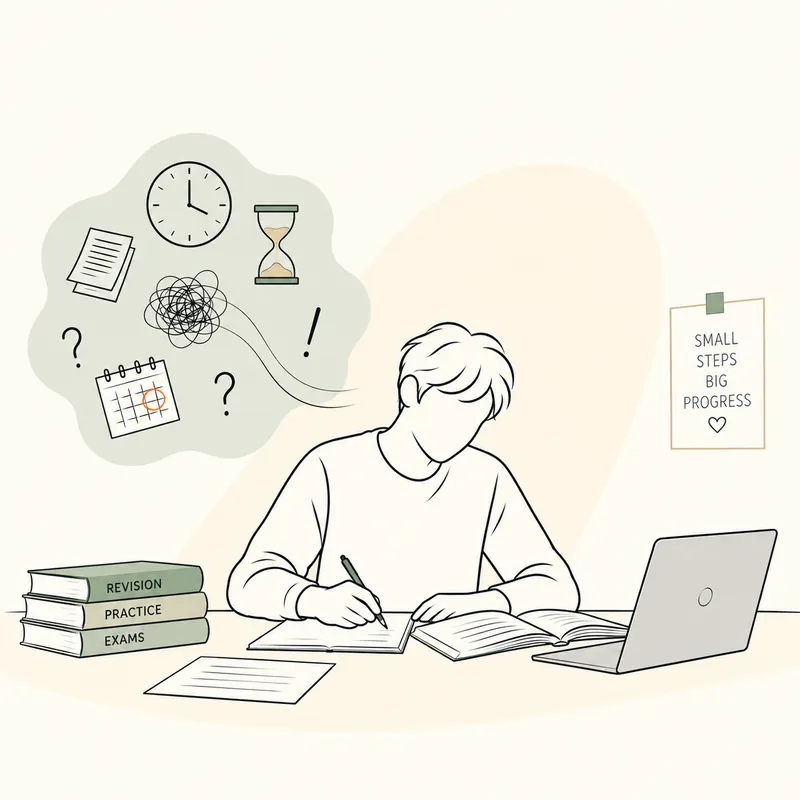
Exam preparation
Motivation and wellbeing
Greater self-confidence
Everyday balance
“It was incredibly refreshing and changed how I felt day to day. After doing the exercises I immediately felt much calmer, which helped me before starting tasks I'd been anxious about. It helped me deal with thoughts like 'I can't do this'.”
The beChill® Exams programme
A programme designed specifically for teenagers preparing for exams and other situations where they're being assessed. It combines techniques from sophrology, mindfulness and positive psychology.
Format
8 weekly sessions of 60 minutes — the recommended course option. A 6-session version of 75 minutes each is also available.
Small groups — 6 to 10 people · Online via Zoom or in person in the Gdańsk area · Sessions after school
Sessions are taught in English and adapted to the language level of the group. When something isn't understood, I explain it in Polish.
Access to the beChill® app, with recordings of every exercise, available until the end of the school year. The materials are in the original, in English.
This isn't a lecture. Every session includes practice, and you leave with something you can use that same evening.
For schools and organised groups, I adapt the programme to fit the school calendar and timetable.
What you'll learn
- How your nervous system works
- Anchoring calm — techniques that work in seconds
- The teenage brain: how to work with it
- Managing energy and concentration
- Habits and automatic responses
- Creating distance from thoughts like "I can't do this"
- Building optimism
- Sleep hygiene
- The value of a mindful break
For parents: what this is, and what it isn't
Most teenagers don't ask for help. They say "I'm fine," then can't sleep on Sunday night.
This course isn't therapy, and it doesn't replace professional support. It's something different: learning concrete skills, the same way you'd learn to swim. Once the techniques are learned, they stay with you — useful for IB, IGCSE or A-level exams, at university, in job interviews, and long after.
When to start? The earlier, the better — these techniques work best once they've been practised, not just learned. But it's never too late: even recently learned techniques can make a difference before an important event, and every course includes access to recordings you can use independently until the end of the school year.
What your teenager gets: small-group sessions, access to recordings, and a set of techniques they can draw on independently.
Free webinar for parents
Before every course, I run a session for parents. I explain exactly what happens in the course, how the teenage nervous system responds under pressure, and what you can do at home. You're welcome to come and listen, without any obligation to sign your child up.
When a group isn't the right fit
Sometimes a group isn't the right setting — the topic may feel too personal, the schedule may not work, or something more tailored may be needed.
I offer individual sessions for teenagers dealing with difficulties concentrating or sleeping, strong performance anxiety before a show or competition, low self-confidence, or particularly stressful periods.
How it works. We start with a conversation with the parent — about what's going on and what you're hoping for. The sessions themselves are one-to-one with the teenager, without a parent present: this is what allows a young person to speak openly and work at their own pace. I share updates on progress within the boundaries we agree at the start.
Why 3–5 sessions. That's usually enough to address the specific issue a teenager brings, try a few techniques, and see which ones work best for them. If the issue turns out to be more complex, we'll already know which direction is worth pursuing — or whether different support is needed.
The first session lasts 90 minutes, follow-ups 60. I offer individual sessions in both Polish and English.